


Post-purchase software has become one of those e-commerce categories where everything starts sounding the same after a while.
Every company talks about customer experience. Every company promises better visibility. Every company claims it can reduce support tickets and improve retention. Then you start looking closer.
One platform is really focused on reducing “Where is my order?” inquiries. Another is built for large retailers dealing with operational complexity. Someone else is trying to turn tracking pages into customer engagement channels. A few are focused almost entirely on what happens when shipments go wrong.
They all belong to the same category, but they’re not solving the same problem. That’s what makes choosing a post-purchase platform harder than it first appears.
The best solution for a global retailer shipping thousands of orders every day is rarely the same solution that works for a growing Shopify brand. A company struggling with support volume is going to evaluate software differently than a business looking for better carrier reporting or stronger customer retention.
So instead of focusing on who has the longest feature list, it makes more sense to look at what each platform seems to do particularly well.
1. WISMOlabs
Spend enough time with ecommerce support teams, and one problem comes up again and again: customers keep asking, “Where is my order?”
The interesting part is that many of those customers already have access to tracking information. They’ve clicked the tracking link. They’ve checked the latest status. They still end up contacting support.
Usually, they’re not looking for another tracking number. They want reassurance. Is the package delayed? Is somebody aware of the issue? Should they be concerned or just wait another day? That gap between available information and customer confidence is where WISMOlabs has built its position.
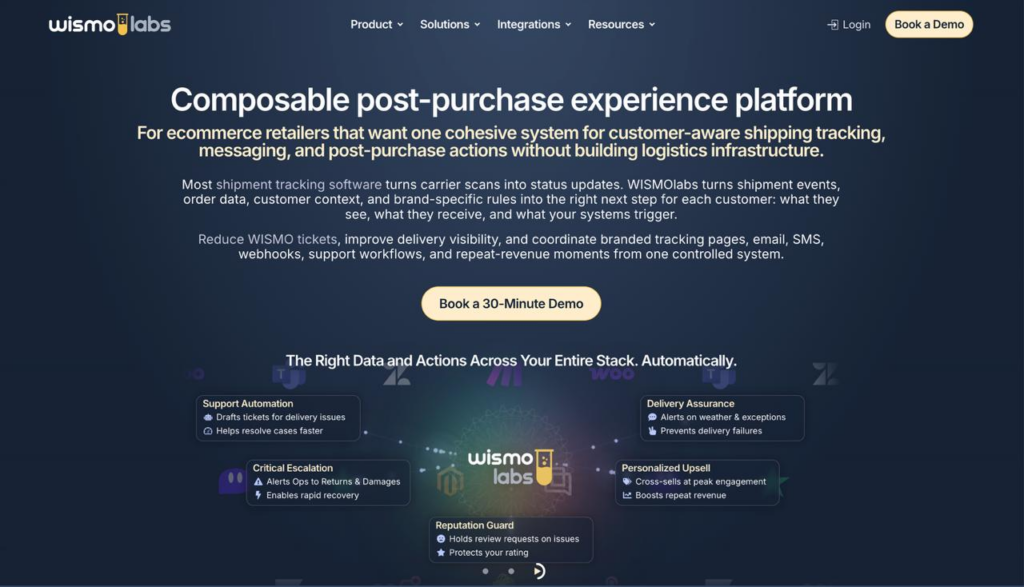
WISMOlabs isn’t just another tracking page or returns tool. It functions as a contextual communication layer that kicks in during the moments customers need the most reassurance – starting at checkout and carrying through shipment, delivery, and any follow-ups.
It brings together real-time carrier data, exception handling, branded tracking, and timely notifications. The result? Fewer “Where is my order?” inquiries and much more control for retailers over the delivery journey.
What really makes it different is the way it combines multi-carrier tracking with broader customer and order context. Events from different carriers are normalized and enriched with order details, customer history, and other relevant information. This helps trigger the message that matches the shipment, customer, and situation.
Customers end up with less uncertainty. Support teams see fewer repetitive questions. Plus, brands can keep shoppers inside their own branded experience instead of pushing them to carrier sites. The platform also includes self-service lookup, carrier analytics, engagement reporting, and coverage for over 750 carriers.
Key strengths:
- Branded tracking pages
- Intelligent shipment notifications
- WISMO reduction workflows
- Delivery exception communication
- Self-service order lookup
- Customer engagement analytics
- Carrier performance reporting
- Support for 750+ carriers
Best for: E-commerce brands looking to reduce support volume and create a stronger post-purchase experience by combining logistics data, order information, customer context, and customer communication in one platform.
2. Narvar
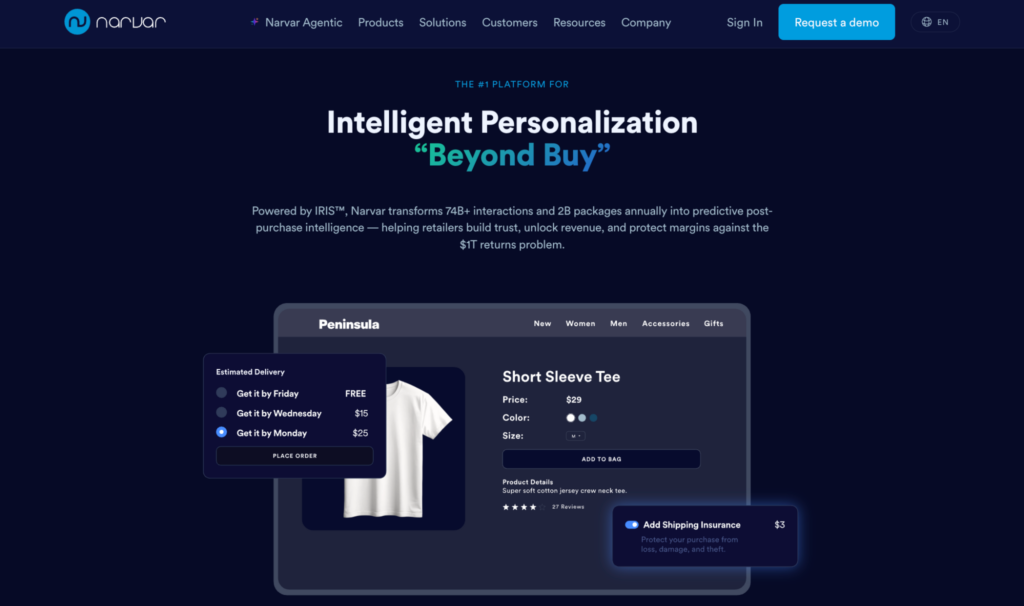
Narvar is one of those names that appears in almost every conversation about enterprise post-purchase software. There is a simple reason for that.
The company has spent years working with retailers that operate at a scale where post-purchase communication becomes surprisingly difficult to manage. Multiple fulfillment centers, multiple delivery providers, multiple customer segments, and millions of orders all create complexity that smaller businesses rarely encounter.
Narvar was built with that environment in mind. Tracking, delivery communication, returns, and customer-facing experiences all sit within the same ecosystem. That can be valuable for retailers trying to avoid managing several disconnected systems.
The platform isn’t necessarily the first choice for smaller ecommerce businesses, but it continues to be a familiar option for enterprise teams that need consistency across large operations.
Key strengths:
- Enterprise-grade infrastructure
- Order tracking and visibility
- Returns management
- Multi-channel customer communication
- Extensive integrations
- Global retail adoption
Best for: Enterprise retailers and large ecommerce operations.
3. AfterShip
AfterShip has become one of the most widely recognized names in shipment tracking. Part of that popularity comes from how easy it is to understand. Many retailers don’t start their search looking for an advanced post-purchase strategy. They simply want customers to have a better tracking experience than whatever comes out of the box.
That’s where AfterShip fits nicely. The platform offers branded tracking pages, delivery notifications, and support for a large number of carriers. Setup tends to be straightforward, which makes it appealing for businesses that want improvements without a lengthy implementation process.
As brands grow, some eventually start looking for more sophisticated communication workflows or deeper customization options.
Even so, AfterShip remains one of the most common starting points for companies investing in post-purchase software.
Key strengths:
- Multi-carrier shipment tracking
- Branded tracking pages
- Delivery notifications
- E-commerce platform integrations
- Customer-facing shipment visibility
- User-friendly setup
Best for: Growing ecommerce businesses looking for a practical entry point into post-purchase software.
4. parcelLab
Some retailers see delivery communication as an operational necessity. parcelLab tends to treat it as something much more important.
The idea behind the platform is fairly simple. Customers pay attention to delivery updates. In many cases, they open those emails more often than marketing campaigns.
So why waste that attention?
parcelLab gives retailers more control over how delivery communication looks, feels, and behaves. Messages can be personalized around shipment milestones, customer behavior, and delivery conditions rather than relying on generic updates. For brands that care deeply about customer experience, those details can have a meaningful impact.
A shipment update might only take a few seconds to read, but it can still influence how customers feel about the entire purchase.
Key strengths:
- Personalized delivery journeys
- Advanced communication workflows
- Branded customer experiences
- Delivery milestone messaging
- Customer engagement analytics
- Enterprise scalability
Best for: Brands focused on personalization and customer engagement.
5. Wonderment
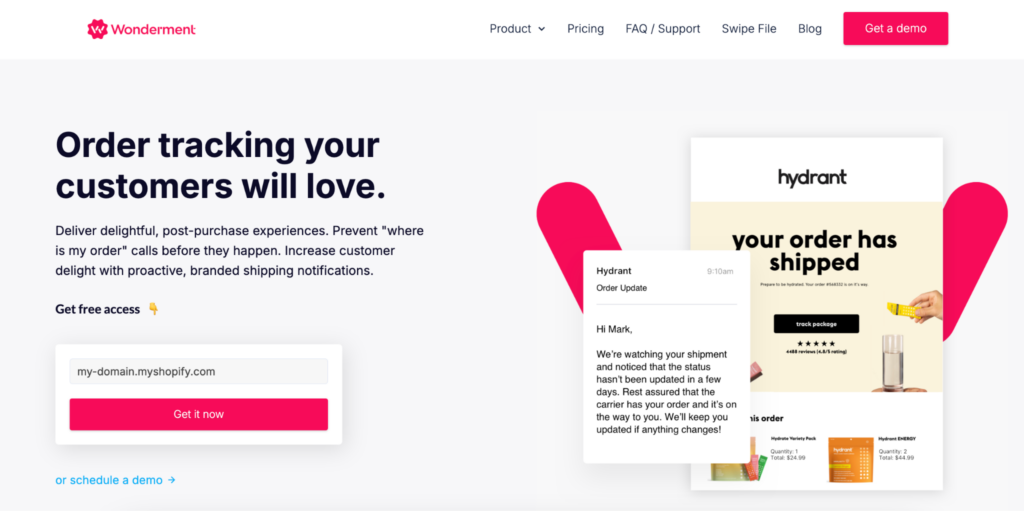
Wonderment has built a strong following among direct-to-consumer brands, particularly those operating on Shopify. What attracts many retailers is the platform’s simplicity.
Not every company wants a large enterprise system. Sometimes the goal is much narrower. Customers need better updates, support teams need fewer delivery questions, and everyone wants a clearer picture of what is happening with an order. Wonderment focuses on exactly that.
The interface is easy to navigate, implementation is relatively straightforward, and the experience feels approachable for teams that don’t want another complicated piece of software to manage.
That focus has helped Wonderment become a popular option among growing e-commerce brands.
Key strengths:
- Real-time order visibility
- Shopify-focused integrations
- Delivery notifications
- Customer tracking experiences
- Support ticket reduction
- Straightforward implementation
Best for: Shopify merchants and DTC brands.
6. WeSupply Labs
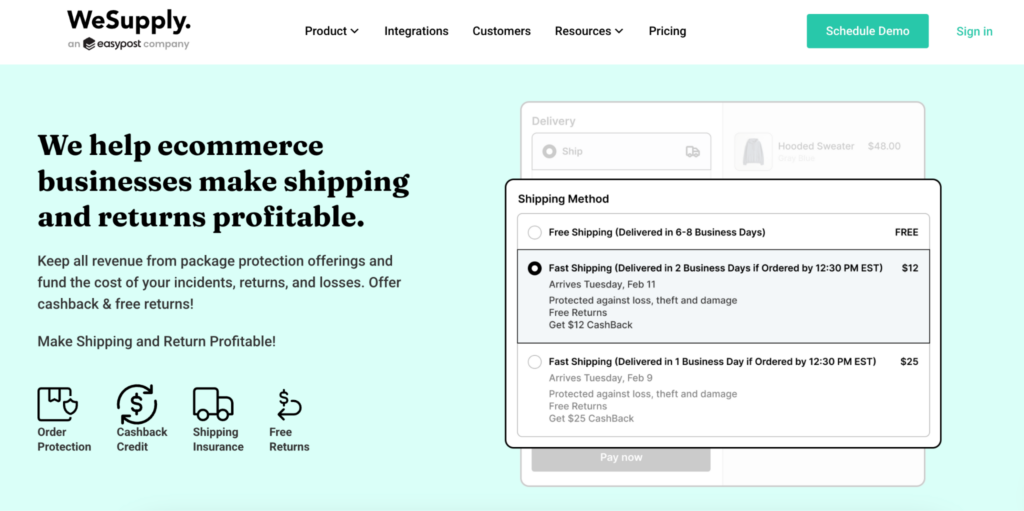
Returns rarely get as much attention as shipping. That’s surprising, especially considering the big impact they have on how satisfied customers feel overall.
Even the smoothest delivery can be overshadowed when a customer struggles with a return or exchange. WeSupply Labs was built with this in mind.
On top of shipment tracking, the platform includes solid tools for returns management, exchanges, proactive notifications, and self-service experiences. Retailers can now oversee a larger part of the post-purchase process without switching between multiple systems.
This broader view is especially valuable for businesses with heavy return volumes. In practice, many see WeSupply Labs not just as a tracking solution, but as a way to manage everything that occurs once an order is out the door.
Key strengths:
- Shipment tracking
- Returns management
- Exchange workflows
- Customer notifications
- Self-service customer tools
- E-commerce platform integrations
Best for: Retailers looking to combine delivery visibility and returns management.
7. Malomo
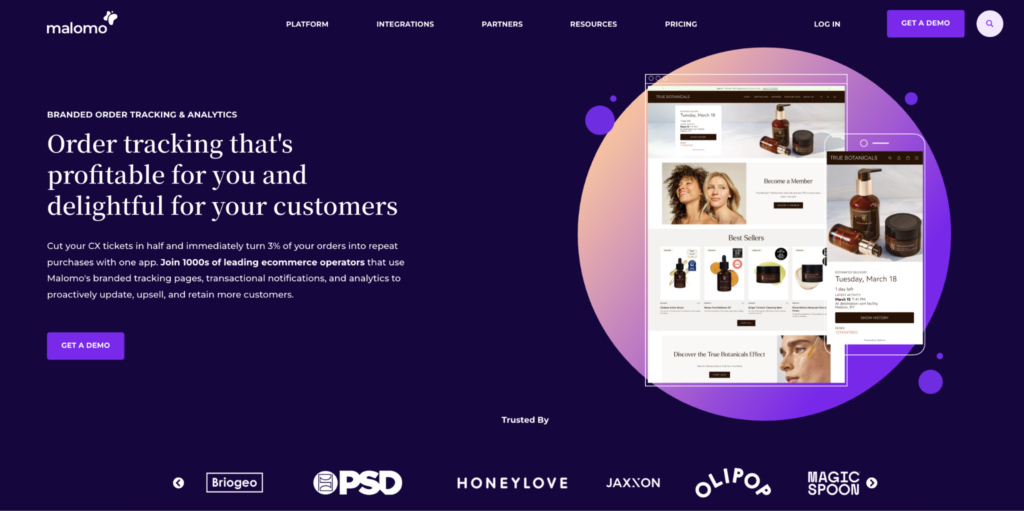
Most tracking pages aren’t particularly memorable. Customers open them, check a status update, and close the tab. Malomo was built around the idea that retailers are overlooking an opportunity.
Someone waiting for a package will often visit the tracking page multiple times before delivery. That’s the attention the brand has already earned. The question is what happens with it.
Malomo helps retailers create branded tracking experiences that feel connected to the rest of the shopping journey. Rather than sending customers to a carrier website, brands can keep those interactions within their own environment.
For direct-to-consumer companies, that level of control can be appealing. The shipment status remains the same. The experience around it changes.
Key strengths:
- Branded tracking pages
- Customer engagement tools
- Delivery notifications
- Retention-focused experiences
- E-commerce integrations
- Simple deployment
Best for: Brands focused on engagement and post-purchase branding.
8. Parcel Perform
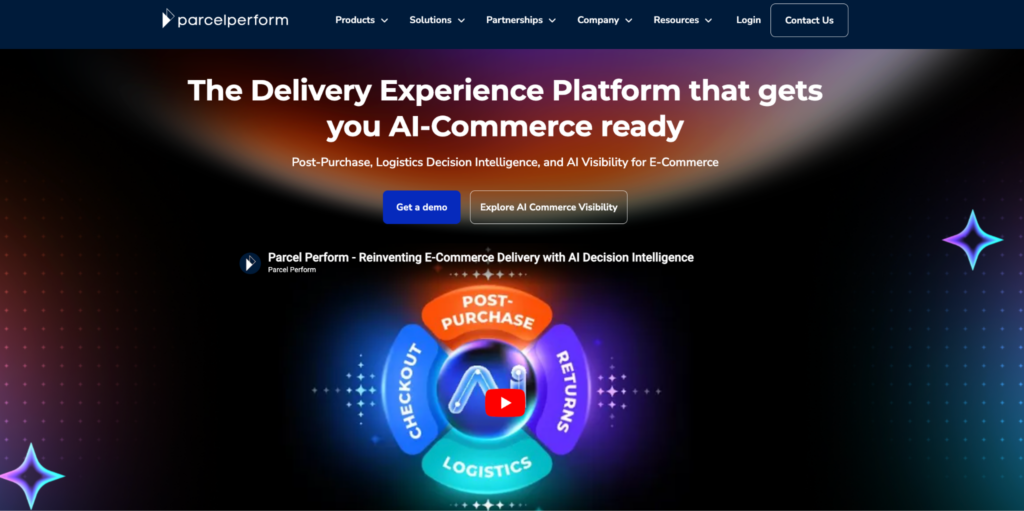
Parcel Perform usually enters the conversation when logistics teams need answers that go beyond individual shipments.
Customer-facing tracking is important, but large retailers also need to understand what’s happening across their entire delivery network.
Which carriers consistently underperform? Where are delays becoming more common? Which routes are creating the most problems?
Parcel Perform helps uncover those patterns. The platform combines shipment visibility with reporting and analytics tools designed to help retailers understand delivery performance at scale.
For companies operating across multiple markets and carrier networks, those insights can be just as valuable as the customer-facing experience itself.
Key strengths:
- Multi-carrier tracking
- Global shipment visibility
- Delivery analytics
- Logistics performance reporting
- Operational insights
- Enterprise scalability
Best for: Retailers managing large shipping networks and global fulfillment operations.
Quick Comparison
Although these platforms are often grouped together, they’re not necessarily competing on the same strengths. Some are heavily focused on customer communication, while others lean toward logistics, branding, returns, or enterprise operations.
A quick comparison helps highlight where each platform stands out.
| Platform | Best For | Primary Strength |
| WISMOlabs | Customer communication and WISMO reduction | Context-driven post-purchase experiences |
| Narvar | Enterprise retail operations | Scale and ecosystem |
| AfterShip | Growing ecommerce brands | Ease of implementation |
| parcelLab | Personalized customer journeys | Customer engagement |
| Wonderment | Shopify and DTC brands | Simplicity and visibility |
| WeSupply Labs | Tracking and returns management | End-to-end post-purchase workflows |
| Malomo | Brand engagement | Branded tracking experiences |
| Parcel Perform | Global shipping operations | Logistics visibility and analytics |
Not Every Retailer Needs the Same Thing
Spend a few hours researching post-purchase software, and you’ll notice a pattern. The marketing messages start sounding remarkably similar.
Everyone promises better customer experiences. Everyone promises improved visibility. Everyone promises fewer support tickets.
The differences become clearer once you start looking at the problems each platform was originally built to solve.
Some retailers need better communication. Others need stronger return processes. Some are trying to understand carrier performance. Others are simply tired of answering the same delivery questions every day. That’s usually where the right choice reveals itself.
The Experience Customers Talk About Later
Customers rarely remember which software powered a tracking page. What they remember is whether the experience felt frustrating. They remember waiting days without an update. They remember wondering whether a package was lost. They remember having to contact support just to find out what was happening.
They also remember the opposite. Clear communication. Helpful updates. Fewer surprises. That’s ultimately why post-purchase software has become such an important part of e-commerce operations.
The delivery experience used to be viewed as something that happened after the sale. More retailers are starting to see it differently. They’re treating it as part of the sale itself.
And in many cases, that’s exactly what customers have been doing all along.



Leave a Reply
You must be logged in to post a comment.