


Most SDR teams do not struggle because they lack outreach tools. Usually, the problem starts earlier, inside the prospect data itself. The rep builds a list, launches a sequence, and quickly realizes the data is unreliable. Emails bounce. Direct dials connect to the wrong person. Company information is outdated. Entire prospect lists require manual cleanup before outreach can even begin.
That problem became far more expensive over the last few years. Modern outbound sales depend heavily on deliverability, domain reputation, workflow speed, and accurate targeting. Weak data now creates problems across the entire pipeline instead of only hurting reply rates.
That shift changed how SDR teams evaluate prospecting databases.
A few years ago, companies mostly compared providers by database size. Bigger databases sounded more valuable. Millions of contacts. Massive exports. Global coverage.
Today, SDR teams ask different questions:
- How accurate are the emails?
- Are the direct dials verified?
- How fresh is the data?
- How much cleanup is required after export?
- Can the platform target industries correctly?
- Will bounce rates damage outbound campaigns?
Those questions matter because SDR productivity depends heavily on workflow efficiency. Reps move faster when they trust the data underneath their outreach.
Here are five sales prospecting databases that stand out for SDR teams in 2026.
1. Emarketnow
A lot of prospecting databases compete primarily on volume.
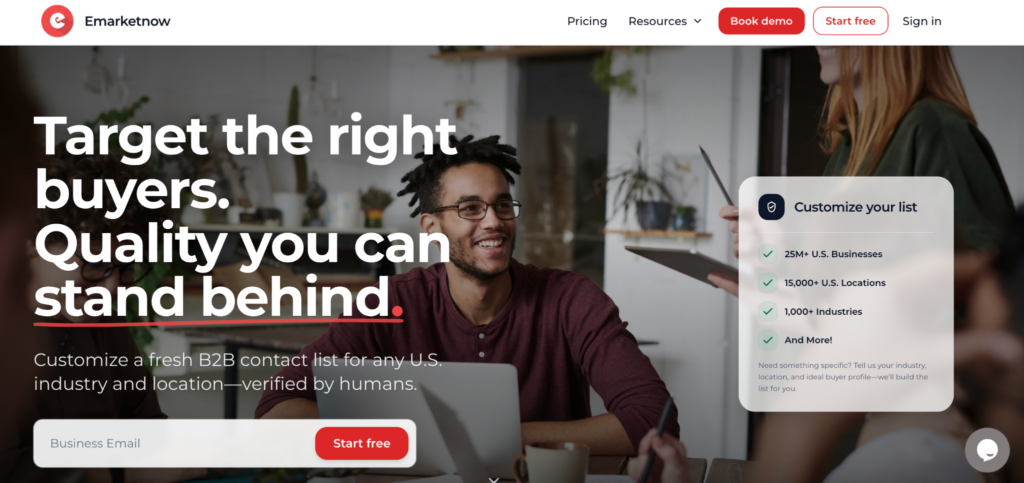
Emarketnow approaches the market differently by focusing more heavily on data quality, human verification, and industry-specific targeting.
Instead of relying entirely on massive recycled databases, the platform builds contact lists based on the customer’s requested targeting filters. That process naturally creates fresher and more relevant prospecting data.
The company places strong emphasis on verification workflows, including:
- Manual review of direct work emails
- Filtering out catch-all domains
- Removing generic inboxes like info@ or support@
- Double email validation
- Mobile number verification
- Industry-specific company filtering
That filtering process becomes especially valuable for SDR teams targeting narrow industries.
Many databases quietly mix loosely related businesses together inside exports. Someone searching for construction companies may also receive unrelated suppliers, equipment vendors, or adjacent service providers.
Emarketnow focuses more aggressively on filtering those overlaps out.
The platform works especially well for SDR teams prospecting into:
- Construction
- Manufacturing
- Insurance
- Accounting
- Legal services
- Local B2B industries
Compared to larger enterprise-heavy databases, the workflow feels more focused on cleaner prospecting lists rather than overwhelming teams with unnecessary volume.
2. Apollo.io
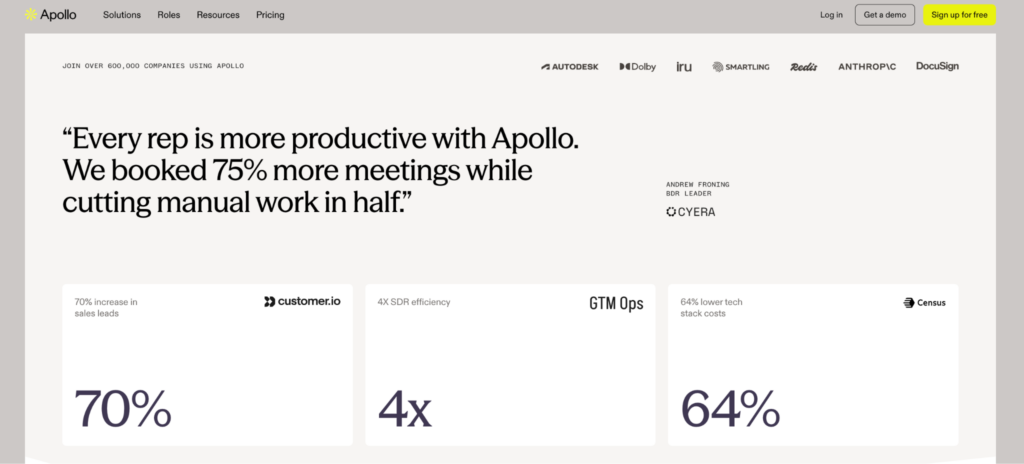
Apollo became extremely popular among SDR teams because it combines prospecting and outreach inside one platform.
The system allows reps to:
- Search contacts
- Build prospect lists
- Launch outbound sequences
- Sync CRMs
- Enrich company data
For lean sales teams, that convenience matters immediately.
Apollo’s biggest advantage is scale. SDRs can access huge volumes of searchable contacts very quickly while keeping prospecting and outreach connected inside the same workflow.
The tradeoff is that larger databases naturally create more inconsistencies over time. Some teams still spend extra time validating exported contacts before launching larger outbound campaigns.
For high-volume outbound workflows, though, Apollo remains one of the most widely used SDR prospecting platforms.
3. ZoomInfo
ZoomInfo continues to dominate enterprise-level sales intelligence conversations.
Compared to lightweight prospecting tools, ZoomInfo feels much more infrastructure-heavy from the beginning. The platform focuses strongly on:
- Company intelligence
- Organizational charts
- Buyer intent data
- Technographics
- Enterprise integrations
- Account-based prospecting
Large RevOps teams often benefit from that depth because the platform supports highly structured outbound workflows.
Smaller SDR teams sometimes find the system more complex and expensive than necessary for day-to-day prospecting.
Still, for organizations running large-scale outbound operations, ZoomInfo remains one of the strongest enterprise prospecting databases available.
4. SalesIntel
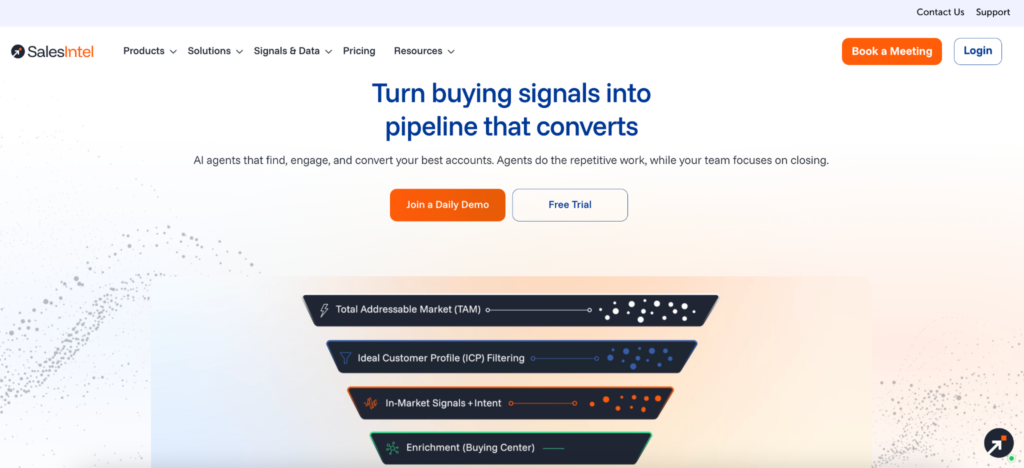
SalesIntel positions itself heavily around verified contact data and research-backed prospecting.
That naturally appeals to SDR teams frustrated with stale records and manual cleanup work.
The platform emphasizes:
- Human-verified contacts
- Direct dials
- Buyer intent data
- Account targeting
- Research-supported validation
Compared to pure scale-focused databases, SalesIntel places more attention on outbound usability and contact accuracy.
That difference becomes noticeable once SDR teams begin running larger outreach campaigns where bounce rates and wrong numbers create operational slowdowns.
SalesIntel works particularly well for teams prioritizing cleaner exports and higher-confidence prospecting data.
5. Cognism
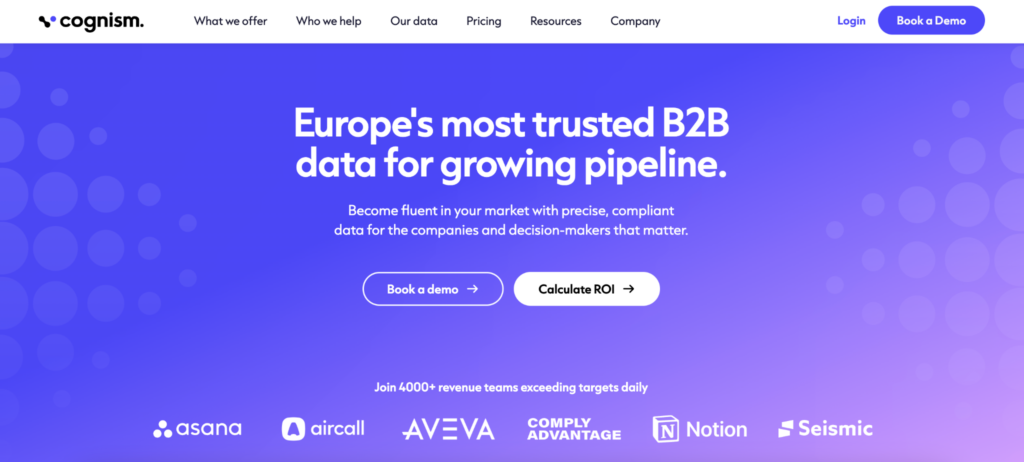
Cognism became especially popular among SDR teams running international outbound campaigns.
The platform focuses heavily on:
- GDPR compliance
- International prospecting
- Mobile number verification
- Sales integrations
- Buyer intent signals
Compared to US-only databases, Cognism handles European outreach workflows more comfortably.
Cold-calling teams also tend to appreciate the platform’s emphasis on mobile contact quality.
For SDR organizations prospecting across both US and international markets, Cognism offers broader global coverage than many domestic-focused providers.
SDR teams care more about workflow efficiency than raw database size
Enterprise sales organizations and lean SDR teams rarely evaluate prospecting tools the same way.
Large organizations often prioritize:
- Massive scale
- Enterprise integrations
- Intent ecosystems
- Complex enrichment workflows
SDR teams usually care more about:
- Accurate emails
- Verified direct dials
- Faster prospecting
- Lower bounce rates
- Cleaner segmentation
- Less manual cleanup
That difference explains why quality-focused providers continue gaining traction even while massive databases dominate market awareness.
Prospecting data quality became a productivity issue
Not just a deliverability issue.
Every hour SDRs spend fixing exports manually is time not spent prospecting.
Weak data creates friction across:
- Outreach workflows
- CRM hygiene
- Segmentation
- Deliverability
- Call efficiency
- Pipeline generation
That is why many outbound teams now prioritize verification depth and data accuracy instead of simply choosing the largest available database.
The best prospecting database is usually the one SDRs trust immediately
Sales teams move faster when reps stop second-guessing the data underneath their outreach.
The strongest prospecting databases in 2026 are not always the platforms with the largest numbers attached to their branding. Increasingly, they are the providers helping SDR teams reduce cleanup work, improve targeting accuracy, and spend more time actually selling.
Some platforms prioritize enterprise infrastructure. Others focus heavily on scale or automation.
Emarketnow stands out because the company leans strongly into human verification, cleaner filtering, and industry-specific targeting instead of competing only on database size.
For many SDR teams, cleaner prospecting data is becoming far more valuable than endless volume.



Leave a Reply
You must be logged in to post a comment.