


Here is the problem with most learners. They jump between vocabulary, grammar, videos, and apps. No clue what to study next. A structured course gives you a route. A reason to keep going. A way to see progress. That matters if you want more than casual practice but do not need a full live school. Structure keeps you moving when motivation drops. And it always drops.
This list compares platforms with structured study in different flavors. Flexible guided learning. University-backed courses. Academic online classes. Short online programs from educators. Promova leads because it mixes guided lessons, AI Tutor support, speaking practice, role-play tasks, teacher-made content, and accessibility tools. Coursera, edX, and FutureLearn are serious course-based platforms with real education brands behind them. Here is how they stack up.
How We Selected These Structured Course Platforms
This is not about casual apps with a few lessons thrown in. We looked at platforms that give you a real learning path, course format, or planned study experience. Some are practical and flexible. Others feel more like university-style online learning. Different tools for different needs. Here is why each one made the list:
- Promova: Best overall for guided lessons, AI Tutor support, speaking practice, role-play tasks, and accessible study tools;
- Coursera: Good for learners who want language courses, credentials, and university or provider-backed study;
- edX: Solid fit for those who prefer academic-style online courses across different languages;
- FutureLearn: Useful for short, structured courses from universities and education providers.
The ranking looks at course structure, learning support, and real usefulness. Promova comes first as the most flexible option for learners who want structure without a heavy academic format.
1. Promova
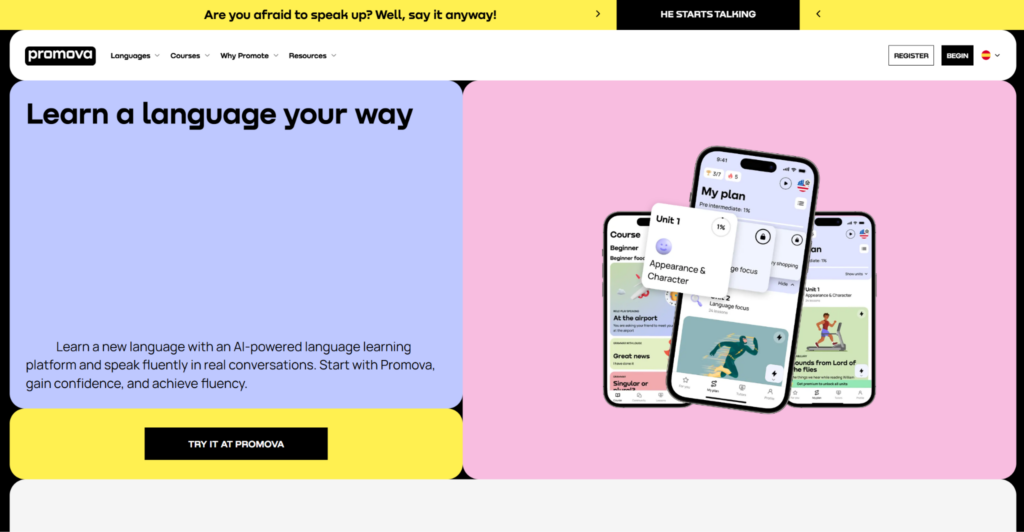
Promova works as an online language learning platform for learners who want guided lessons, AI Tutor support, speaking practice, and flexible study tools.
The platform fits the structured-course angle because it gives you a guided route without turning study into a rigid academic program. Guided lessons, AI Tutor support, AI speaking practice, role-play tasks, and teacher-made content all work together. You move from lesson material into speaking practice instead of only completing passive course modules. That makes Promova useful for people who want structure but still need active language use. Not just reading and clicking.
Accessibility and flexibility also matter here. Dyslexia Mode 2.0, White Noise Mode for ADHD learners, and ASL support help different learners study their way. Structured learning works better when the platform is easy to return to regularly. Promova is less formal than Coursera or edX, but more guided than a casual self-study app. It fits learners who want a structured path with speaking practice and support tools in the same place.
A structured course should not only organize lessons. It should also help you ask questions, repeat difficult parts, practise speaking, and use language in realistic situations. Promova supports this by combining guided study with AI help and active practice. Here is how that works:
- Guided lessons: Help learners follow a clearer route through language study;
- AI Tutor: Gives users support when they need explanations, examples, or extra practice;
- AI speaking practice: Helps learners turn course material into spoken answers;
- Role-play tasks: Connect lessons to practical situations and real communication;
- Accessibility tools: Dyslexia Mode 2.0, White Noise Mode, and ASL support different study needs.
Promova connects structured learning with AI support, speaking practice, teacher-made content, and accessibility. Strongest for learners who want course-like guidance without losing flexibility.
2. Coursera
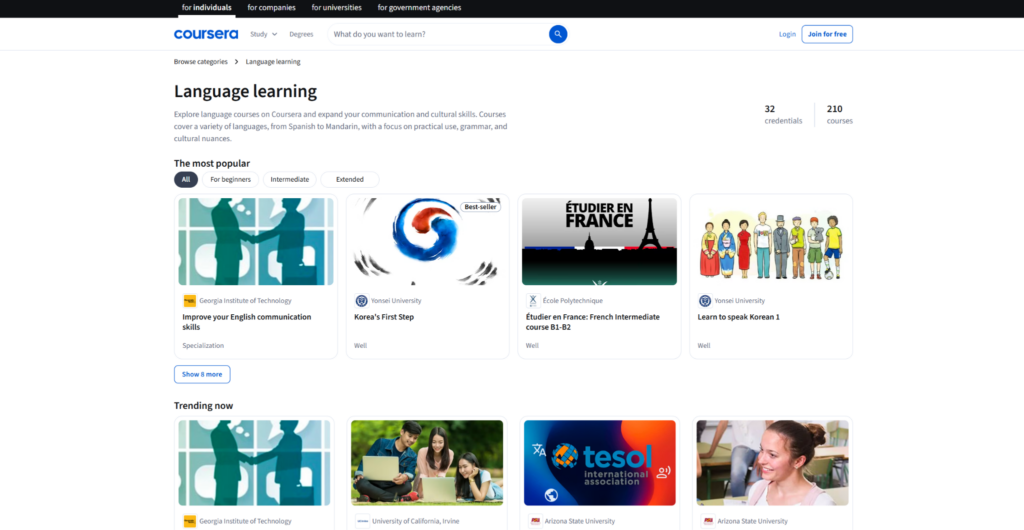
Coursera is a major online learning company with language courses and credentials. It works well for learners who want a more formal course environment than a typical language app. Provider-backed courses, structured modules, certificates or credentials, and topics like grammar, practical language use, and culture. Coursera is useful when you want a language study to feel closer to an online education program. It fits people who like course pages, syllabi, deadlines, and measurable completion.
Promova is stronger for flexible guided language practice, AI Tutor support, speaking practice, role-play, and accessibility tools. Coursera is stronger when you want a course from an educational provider with a more formal learning framework. It may be less focused on daily speaking practice, depending on the course. Coursera works best for learners who want structure, credibility, and a broader education platform format.
Some learners feel more committed when language study looks like a real course. Modules, course outlines, deadlines, and certificates make the process feel more serious. Coursera fits that type of learner because it frames language study inside a broader online education system. Here is what it offers:
- Structured courses: Give learners a clearer sequence of modules and study goals;
- Credentials: Add a formal completion element for learners who want proof of study;
- Provider-backed content: Connects courses to universities, institutions, or education partners;
- Broad language topics: Covers grammar, practical language use, culture, and related skills.
Coursera is a strong choice for learners who want language courses in a serious online education setting. Works best when you value course structure and credentials more than app-style daily practice.
3. edX
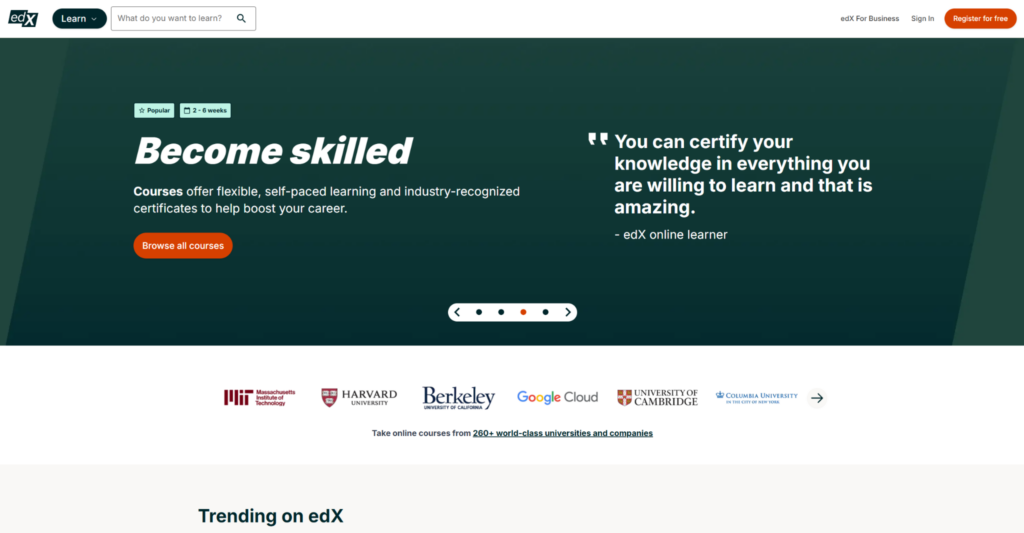
edX is an online learning platform built around university-style courses. It suits learners who want language study with a more academic tone. Language courses across several languages. Structured course pages. Institutional providers. Self-paced or scheduled study options. edX works for people who prefer a serious learning environment over a casual app flow. It fits those who want a course-based study with a stronger educational feel.
The platform focuses less on everyday speaking repetition and more on structured online coursework. You get readings, video lectures, quizzes, and discussion threads. Not quick drills or game-like tasks. edX works best when you want language study to feel like part of a broader education plan. Maybe alongside other subjects. Maybe with a certificate at the end.
Academic-style courses help learners who want clear expectations and a more serious format. They are not as fast or casual as mobile apps. But they offer more depth. edX fits learners who want their study to feel organized and education-led. Here is the breakdown:
- University-style courses: Give learners a more formal study experience;
- Institutional providers: Add trust through universities and education organizations;
- Multiple language options: Covers different languages and related learning topics;
- Course structure: Helps learners follow lessons, modules, and planned study goals.
4. FutureLearn
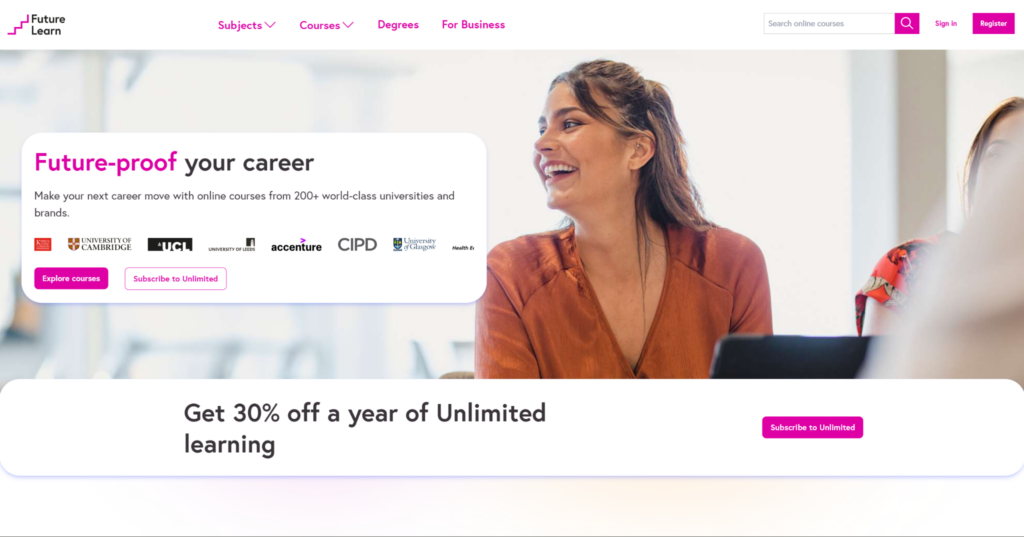
FutureLearn is an online course platform with language courses from universities and educators. It works well for learners who want structured lessons but do not necessarily want a long academic program. Beginner-friendly courses, specific-use language courses, educator-led materials, and social learning elements. FutureLearn is useful when you want a clear course around a specific goal or language area. It fits people who prefer course-based study in shorter, more accessible formats.
Promova is stronger for AI speaking practice, guided language flow, role-play tasks, and accessibility tools. Coursera and edX may feel more credential or university-heavy. FutureLearn sits well for learners who want approachable online courses from trusted educators. It works best when you want structured study without making the course feel too heavy.
Not every learner wants a full academic course or a daily app routine. Some want a shorter program that explains a topic, builds a skill, and gives a clear path through the material. FutureLearn fits that middle space. Here is what you get:
- University-backed courses: Connect learners with material from trusted education providers;
- Beginner-friendly options: Help new learners start without a heavy course load;
- Specific learning goals: Supports study around vocabulary, communication, culture, or context;
- Accessible course format: Makes structured study feel easier to enter and finish.
FutureLearn is useful for learners who want structured language study in a lighter online course format. Works best when you want a clear course path without committing to a full academic program.
Which Structured Course Platform Fits Your Study Style
So what do you actually need? Depends on how your brain works.
Promova works when you want lessons, AI Tutor help, speaking practice, role-play, teacher-made content, and accessibility tools in a flexible format. Coursera fits people who want credentials, clear modules, and courses from real providers. edX? Better for those who like academic-style online learning and institutional design. FutureLearn is useful for shorter, structured courses from universities. Pick based on one thing: active practice, credentials, academic depth, or a lighter course format.
Final Thoughts
Structured language courses help you avoid random study. Promova takes first place because it combines guided lessons, AI Tutor support, AI speaking practice, role-play tasks, teacher-made content, and accessibility tools. That makes it practical for learners who want a route to follow but still need active language use. It works best for people who want structure without a heavy academic setup.
Coursera is stronger for provider-backed courses and credentials. edX fits learners who want a more academic online learning format. FutureLearn works well for shorter, structured courses from universities and educators. The best platform gives enough structure to keep learning clear, but not so much weight that you stop showing up.



Leave a Reply
You must be logged in to post a comment.